
July 9, 2026
Here’s the short version: no confetti, no petals tossed off trail, no going off trail at all, no campfires unless the park says otherwise, and nothing gets left behind, not even the biodegradable stuff. Every couple I work with agrees to follow Leave No Trace on their elopement day, no exceptions, because the places we get to elope in only stay this beautiful if we treat them like it matters. It does.
I’m a certified Leave No Trace educator, not just someone who read about it once and slapped it on a website. So let’s actually talk about what that means for your day, not just the vague version everyone else is giving you.

Why This Actually Matters (Not Just a Nice Idea)
Once a meadow gets trampled, it doesn’t bounce back next season. Once a spot gets geotagged and goes viral, the foot traffic can wreck it for good. Nature doesn’t get a redo. I’ve shot elopements in national parks for years now, and the difference between a spot that’s been protected and one that’s been loved to death is not subtle. If you’re still deciding where that spot even is, check out the pros, cons, and vibes of the best national parks to elope in before you fall in love with a location you haven’t researched yet. It’s the whole reason permits exist in the first place, and it’s the whole reason I require every client to follow these principles on their wedding day. Not a suggestion. A requirement.
The 7 Principles of Leave No Trace, Applied to Your Elopement
These are the real, official principles from the Leave No Trace Center for Outdoor Ethics. Here’s what each one actually looks like on a wedding day.
1. Plan Ahead and Prepare
Know your permit requirements before you show up. Know the weather. Know the trail length and what’s actually allowed at your ceremony spot (some locations restrict flowers, amplified sound, or group size). A rushed plan is how couples end up improvising in ways that hurt the land. Don’t worry though, I can help you navigate the whole permit process.
If Colorado’s on your list, my full guide to planning an elopement in Rocky Mountain National Park walks through exactly what that prep looks like, permit included.
2. Stick to Durable Surfaces
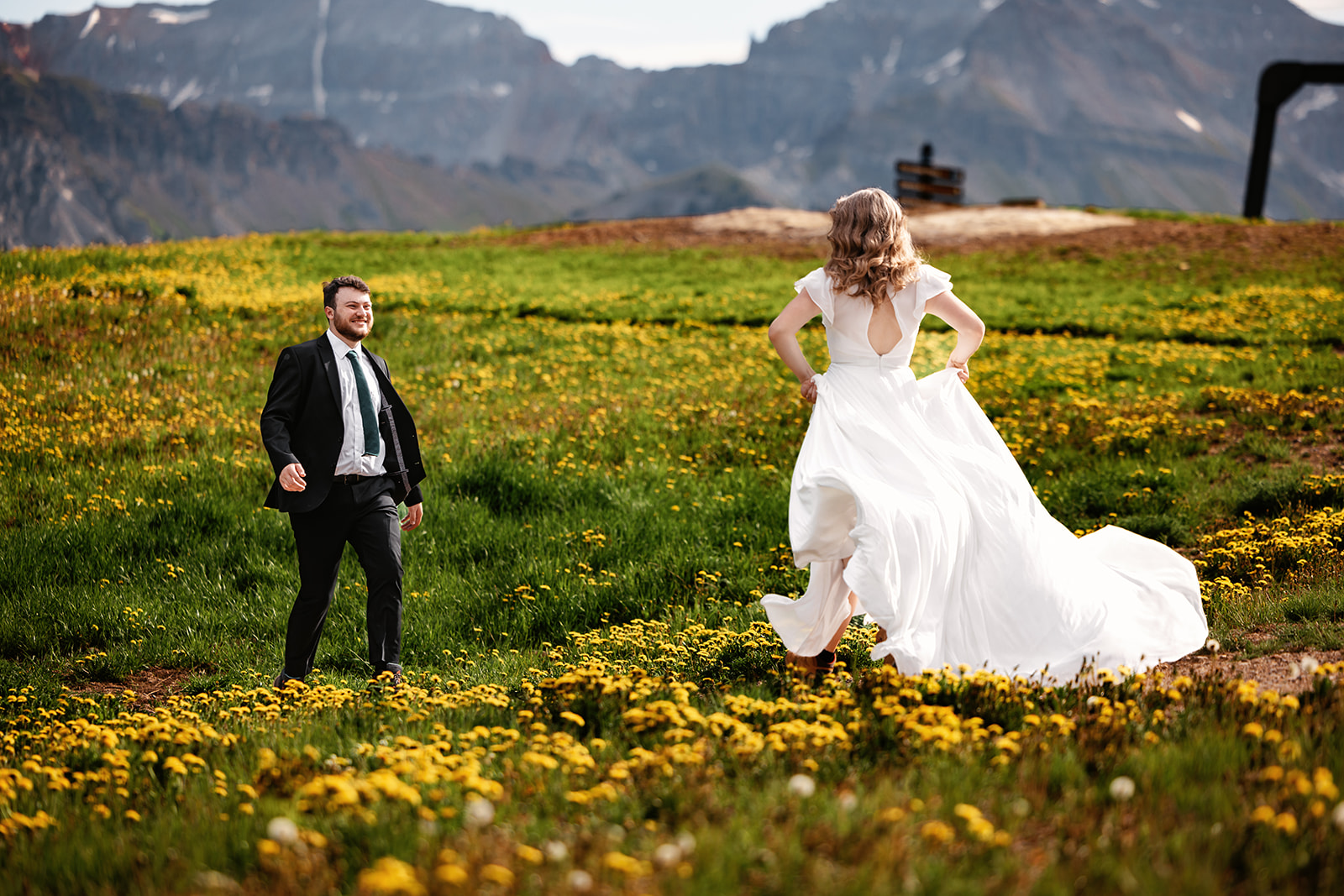
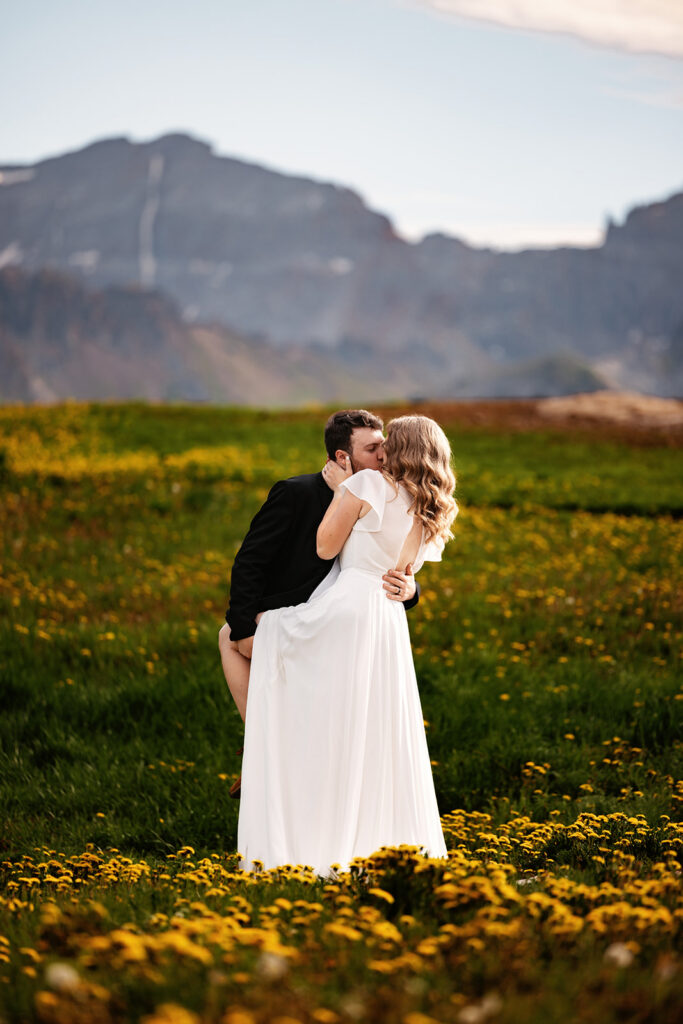
Stay on the trail. Stay on the rock, the gravel, the established path. That gorgeous untouched patch of wildflowers you want to stand in for photos? Untouched is the whole point. Walking into it for one photo can take years to grow back, and, even worse, if you’re at alpine levels, the trampled wildflowers may NEVER grow back. If your photographer suggests a spot, they should be suggesting one that’s already durable ground, not asking you to make a new path through fragile terrain.
3. Dispose of Waste Properly
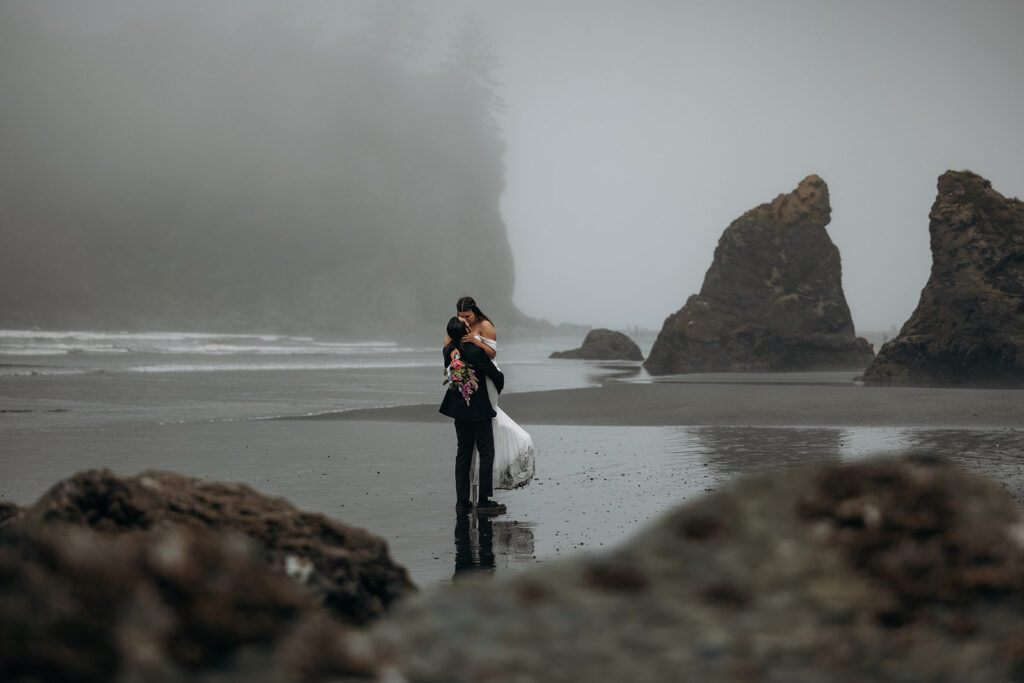
Pack it in, pack it out. All of it. Champagne corks, ring boxes, snack wrappers, even your bouquet if it’s not staying in the environment on purpose. Nothing gets left behind because it “will decompose eventually.”
4. Leave What You Find
Don’t pick the wildflowers growing there. Don’t take a rock as a keepsake. Don’t rearrange sticks or stack stones for the photo. The landscape you fell in love with online is only still like that because people before you left it alone. Take only photos, leave only footprints.
5. Minimize Campfire Impacts
Unless your location explicitly allows and you’re using an established fire ring, skip the campfire entirely. Most elopement spots don’t allow one anyway, and an unauthorized fire is one of the fastest ways actually to damage protected land.
6. Respect Wildlife
No feeding animals for a photo. No approaching for a closer shot. Keep your distance, keep the noise down, and remember you’re a guest in their home on your wedding day.
7. Be Considerate of Other Visitors
Keep the group small, keep the noise down, and share the trail. That epic elopement moment you’re having is also someone else’s quiet hike. Both can happen at once if everyone’s respectful about it.

The Flower Question Everyone Gets Wrong
Here’s the misconception I hear the most: couples think because petals or confetti are “natural” or biodegradable, they’re fine to toss. They’re not. Real flower petals, rice, and biodegradable confetti still don’t belong to that ecosystem. They can introduce nutrients, seeds, or scents that don’t occur there naturally, and wildlife can eat them without benefiting from them. Most parks explicitly ban all of it, glitter included, no matter what the packaging claims.
So here’s what to actually do instead:
- Go silk or wood flowers. A high-quality silk or wood flower bouquet photographs beautifully, holds up in wind and heat way better than fresh stems, and you get to keep it forever afterward. No petals to pack out, no wilting halfway through your hike.
- Buy your fresh flowers from a local shop instead of a big-box florist. If you do want fresh, real blooms for the ceremony itself (not for tossing), a local florist near your elopement location almost always means fresher stems, lower travel impact, and you’re supporting a small business in the town you’re getting married near. Ask them what’s in season locally. It’ll look more you anyway.
- Skip anything that leaves the scene. Confetti, petal tosses, rice throws, balloon releases, sparklers in dry terrain. If it has to leave your hands and land somewhere, it doesn’t belong at a Leave No Trace elopement.

What This Actually Looks Like on Your Day
Nobody’s asking you to elope in silence with zero decor. You can still have a bouquet, a suit that moves well on a trail, a small ceremony arch if your location allows it, and every bit of the emotion you came for. Leave No Trace just means every one of those things comes with you when you leave, and the land looks exactly like it did before you got there. That’s not a limitation. That’s the standard.
Want to see what this actually looks like at 12,000 feet? Here’s a real guide to eloping at Loveland Pass, one of the most beautiful and most fragile spots I shoot. Or if you’re still narrowing down your state, my no-fluff guide to eloping in Colorado covers the rest of the logistics.
Frequently Asked Questions
Do I really need a permit if it’s just the two of us eloping?
Most national parks and many state parks require a Special Use Permit for any wedding ceremony, even with zero guests, though a handful of parks waive this for very small elopements. Requirements vary by park, so check directly with that specific park before assuming you’re exempt.
Are biodegradable flower petals okay to toss during a national park elopement?
No. Even biodegradable petals, rice, and confetti are considered a Leave No Trace violation in most parks because they introduce non-native material into a protected ecosystem. Skip the toss entirely or save it for a location where you have explicit permission.
What should I do with my bouquet if I can’t leave petals behind?
Keep it. A silk or wood flower bouquet holds up through the whole day and becomes a keepsake afterward, or if you used fresh flowers, they simply travel home with you like any other item you brought in.
Can we still have a small campfire for photos or a toast?
Only if your specific location has an established, permitted fire ring and campfires are currently allowed there. Most elopement locations don’t allow fires at all, so plan on lanterns, candles in enclosed holders, or just great light instead.
Does Leave No Trace mean we can’t have any decor at our ceremony?
You can absolutely have decor. The rule is simply that everything you bring in leaves with you, so think reusable arches, ribbon you’ll take down, and silk or wood flowers instead of anything you’re tempted to scatter or leave behind.
Ready to plan an elopement that’s as good for the land as it is for you two? Start your inquiry here and let’s build a day that leaves nothing behind but the memory.


Comments