
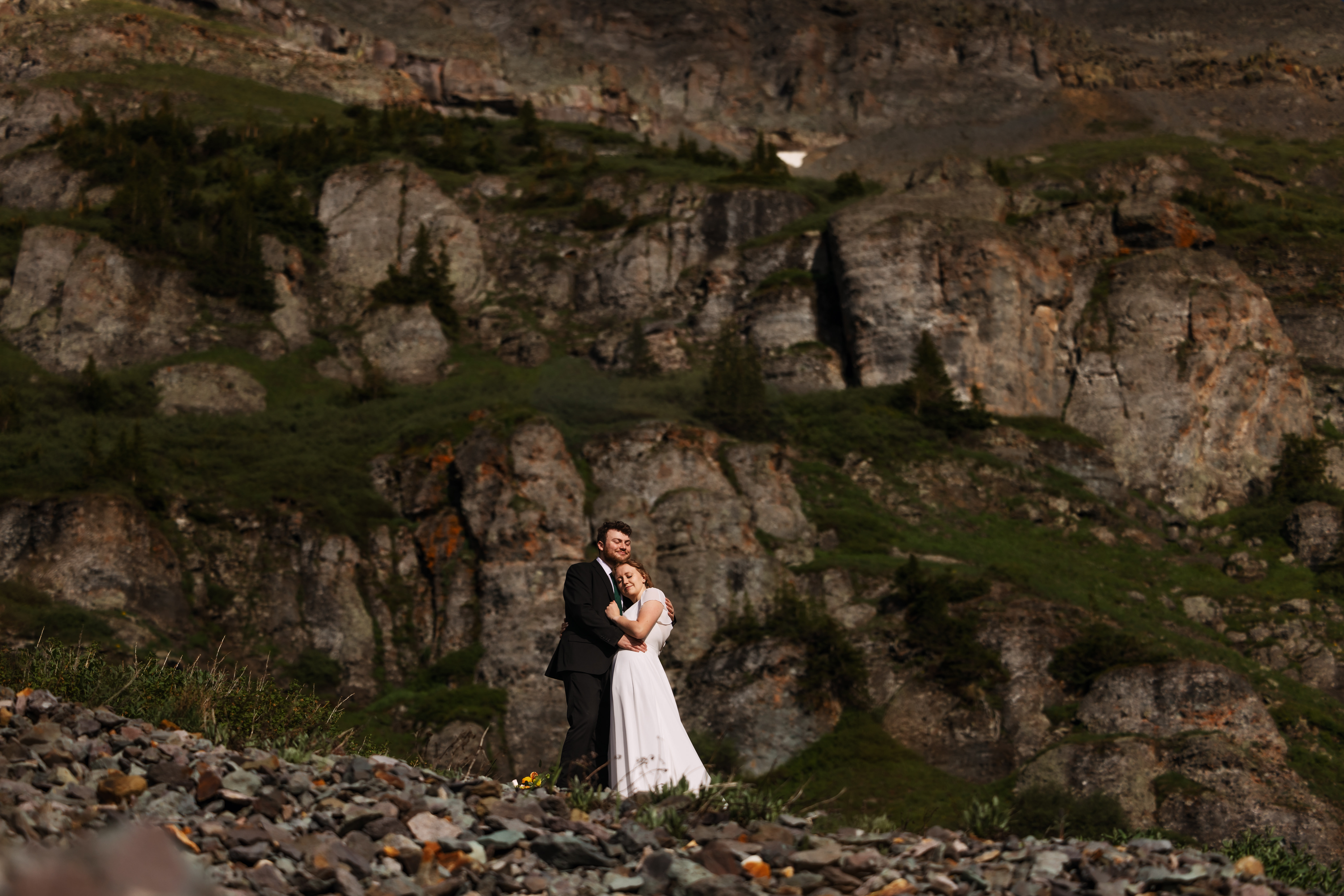
July 26, 2024
Colorado is one of the easiest states in the country to elope in. The marriage license takes 30 minutes. You can sign your own paperwork. No witnesses required.
The hard part isn’t the legal stuff.
The hard part is figuring out where to do it, when to do it, how to get there, what permit you need, what the weather is going to do to you at 11,000 feet, and whether the gravel road to that spot you saw on Pinterest is actually drivable in May.
That’s where I come in.
I’m Shannon. I’m an elopement photographer based between Orlando and Denver. I plan elopements for a living, and I’ve spent the last several years deep in Colorado. Shooting on mountain passes, in alpine basins, on lakeshores at sunrise, and one memorable time at 13,000 feet with class 5 winds and a wedding dress that decided it wanted to fly to Wyoming. (We made it work. The photos are perfect.)
This is the no-fluff guide to how to elope in Colorado in 2026. Real steps. Real locations. What it actually costs. What the weather will actually do. And how to plan it without losing your mind.
Let’s go.
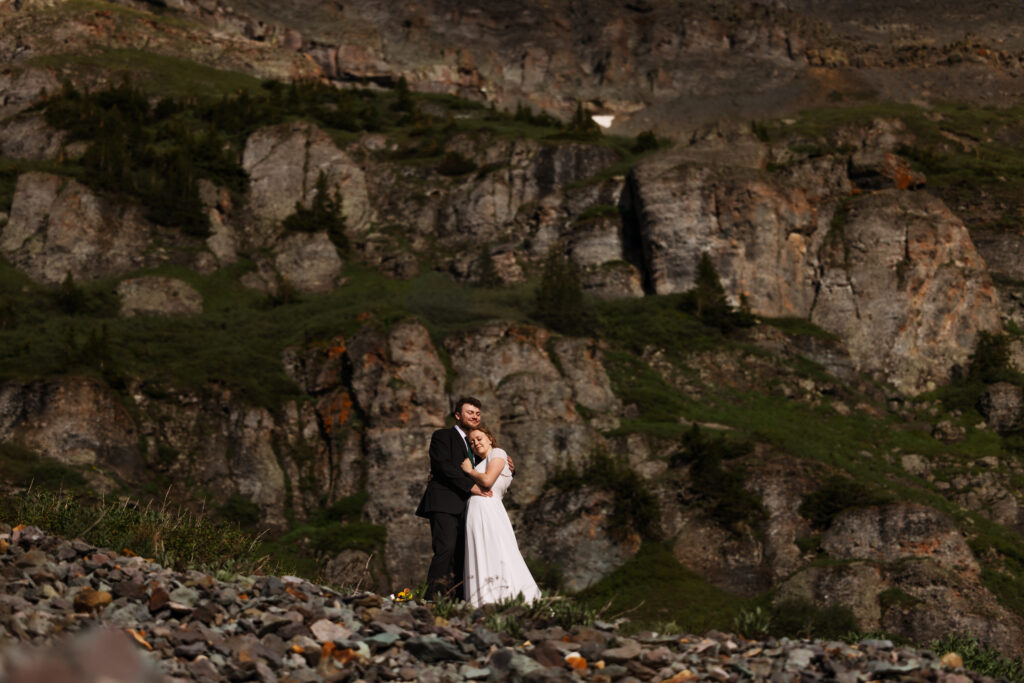
Why Colorado Is One of the Best Places to Elope in 2026
A few reasons.
Self-solemnization. Colorado is one of a handful of states that lets you marry yourselves. No officiant. No witnesses. No friend you ordained online. Just you, your person, and the marriage license. Sign it together and it’s official.
Variety. You want alpine lakes? Got ’em. Sand dunes? Got those too. Aspen groves in fall, snow-covered passes in February, summer wildflowers, hot springs, ghost towns, ski resort gondolas. You can plan two completely different elopements an hour apart from each other.
Access. Denver International Airport hits almost every major US city directly. From there, most of the best locations in Colorado are within a 1.5 to 4 hour drive.
Permit-friendly (mostly). Compared to a lot of states, Colorado is reasonable about elopement permits. You still need them in National Parks and on most public land, but the process is straightforward.
It’s not Vegas. This is the opposite of a courthouse-and-done. If you want your elopement to feel like an actual adventure instead of a transaction, this is the place.
How to Elope in Colorado: The Actual Steps
Here’s the full process, start to finish:
- Pick your date and your general area
- Get your Colorado marriage license
- Choose your specific location
- Apply for a Special Use Permit if needed
- Plan your travel and lodging
- Build your timeline (sunrise vs sunset, ceremony vs portraits, weather windows)
- Hire your photographer (hi)
- Show up. Get married. Eat tacos.
Now let’s break it all down.
Step 1: Get Your Colorado Marriage License
This is the easy part. Colorado has zero waiting period, no blood test, no witnesses required, and no residency requirement. You can fly in, get your license, and get married the same day.
You’ll need:
- A valid photo ID (driver’s license or passport)
- Your social security number (you don’t have to bring the card, just know the number)
- $30, ideally in cash (most counties don’t take card)
- Any divorce decree paperwork if you’ve been married before
The license is valid for 35 days. After your ceremony, you have 63 days to return it for processing.
I wrote a full breakdown of the marriage license process here: How to Get a Marriage License in Colorado. Read that one before you book your trip. It’ll save you from showing up at the wrong county clerk’s office on the wrong day.
Step 2: Pick Your Location
This is the fun part. And the overwhelming part.
Below is a real breakdown of the spots I shoot at most often. I’ve added the actual vibe of each place because Pinterest will not tell you that the alpine lake you fell in love with is a 4 mile hike with 1,500 feet of elevation gain.
Rocky Mountain National Park
The most iconic place to elope in Colorado. Period.
Dream Lake at sunrise. Sprague Lake when the elk are walking through. Bear Lake when the snow is melting and everything is green. RMNP gives you that classic Colorado postcard look.
The catch: it’s popular. The National Park Service caps wedding permits at 60 per month from May through October and 40 per month November through April. They go fast. You also can’t have more than 30 people total, which is more than most elopements need anyway.
I have a full guide here: How to Plan an Elopement in Rocky Mountain National Park.
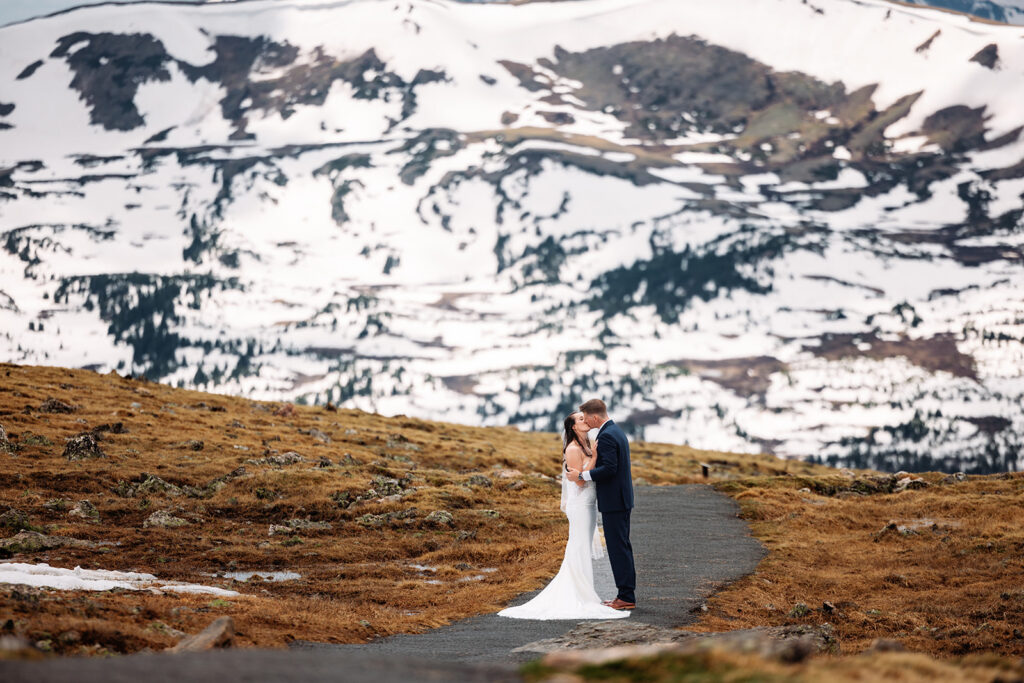
Loveland Pass
One of my personal favorites.
You’re at almost 12,000 feet. The drive up is on the Continental Divide. There are no permits required for ceremonies because it’s not a National Park, just a pull-off on a public road, but the views are some of the best in the entire state.
Best at sunrise. Bring layers. Bring more layers than you think.
Here’s a real one I shot: A Sunrise Loveland Pass Elopement.
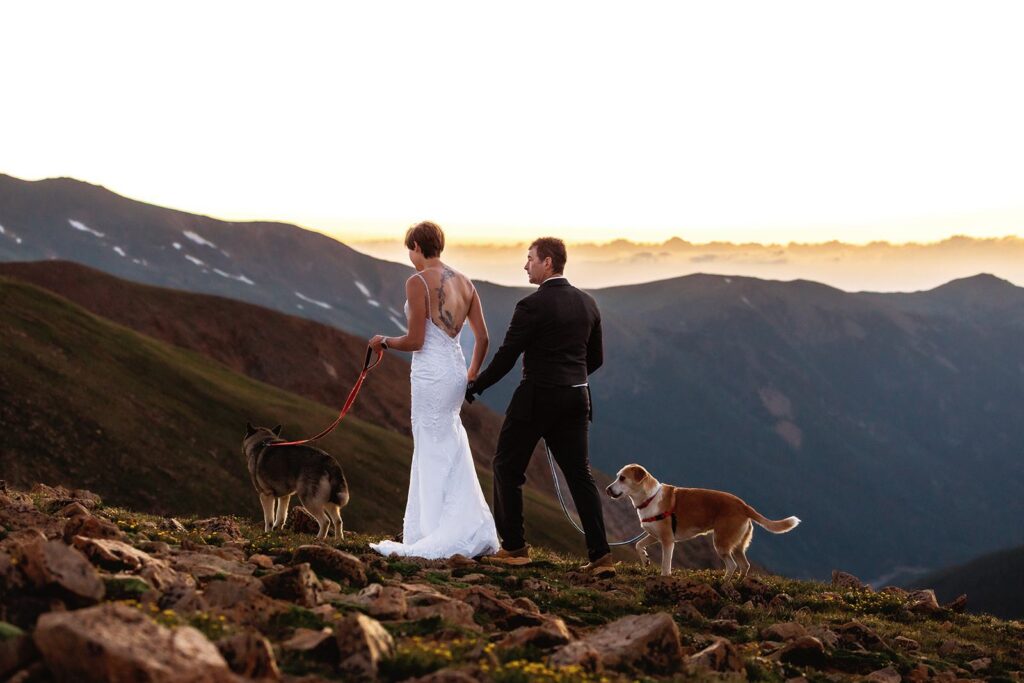
Estes Park
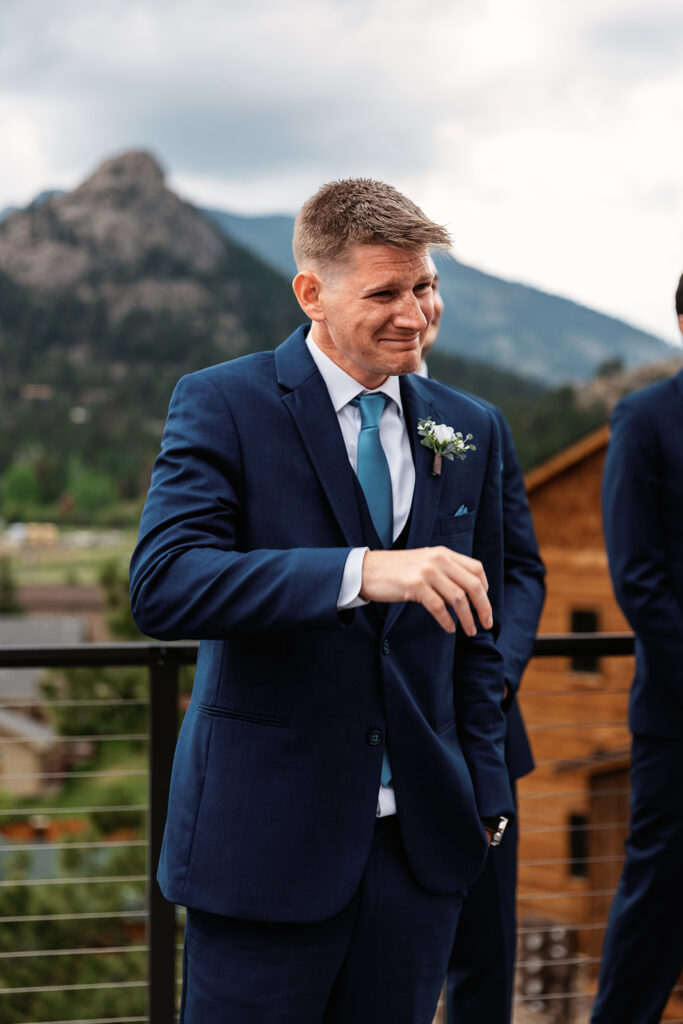
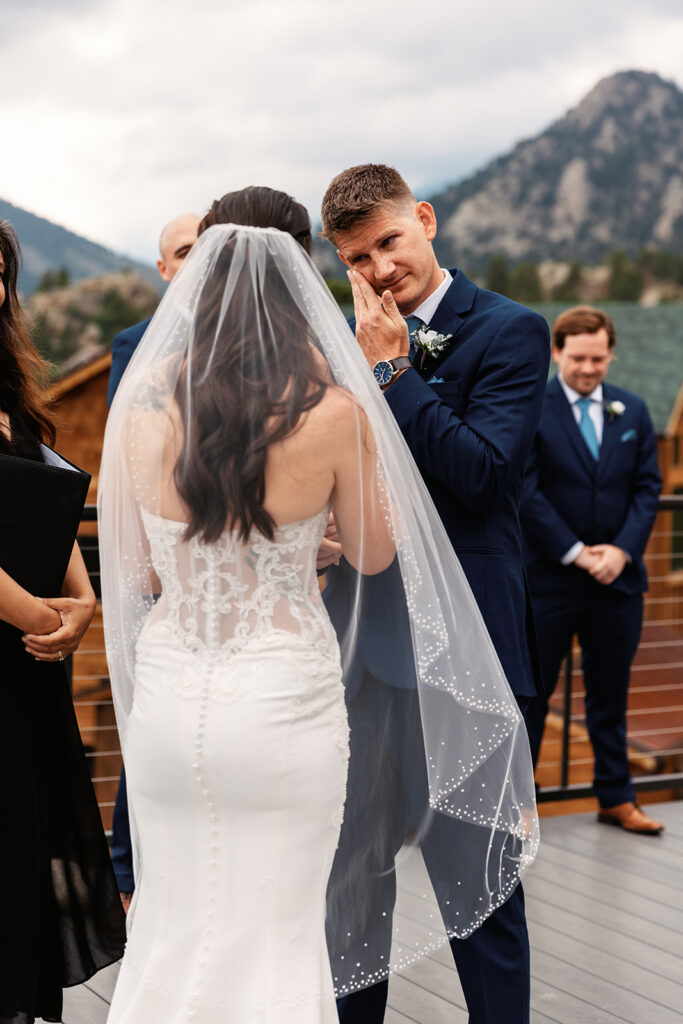
The town outside Rocky Mountain National Park. If you want to be near RMNP but not actually elope inside the park, Estes is the move. You get a real downtown, restaurants, hot tubs, cabins, and easy access to the park for portraits.
Read about a recent one I shot: Mountain-Themed Estes Park Wedding.
Crested Butte
Four hours from Denver, but worth every minute. Crested Butte is a small mountain town with a downtown that feels like a postcard, wildflowers in July that will ruin every other place for you, and ceremony spots ranging from mountain overlooks to lawn weddings to land trust property.
I have a whole separate guide on this one: The Ultimate Guide to Planning a Crested Butte Elopement.

Breckenridge
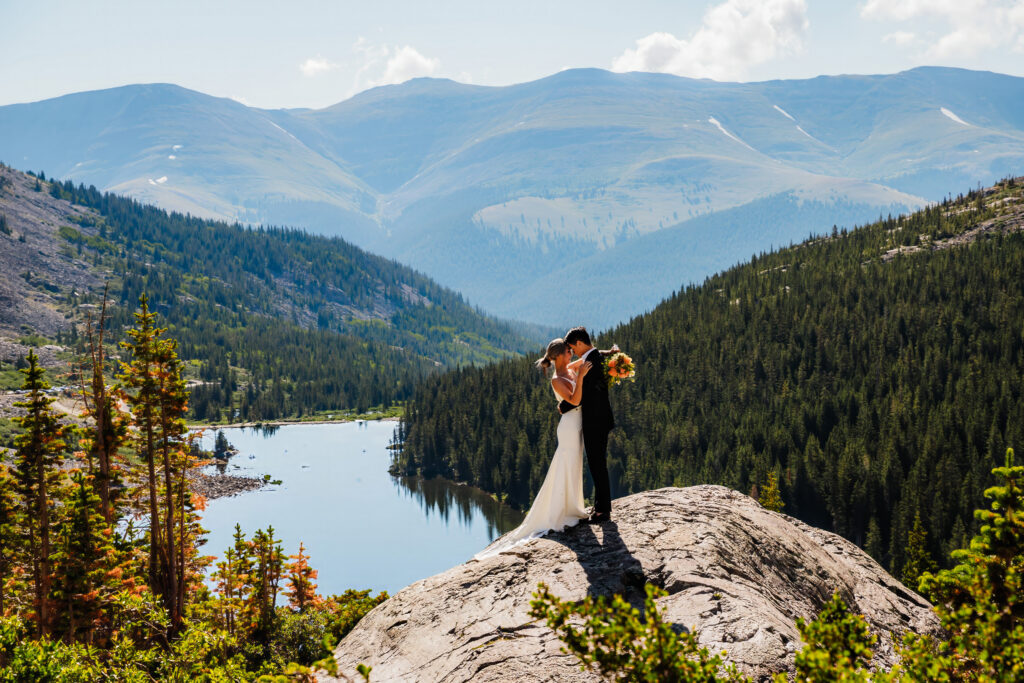
90 minutes from Denver. Easy access. Real town. Sapphire Point is the most popular ceremony spot for good reason. Breck is also one of the better year-round options because the town infrastructure handles snow well, so winter elopements are very doable here.
Aspen
Aspen is having a moment. Maroon Bells Amphitheater is the headline location. Permits open 12 months in advance and are competitive. If you don’t get one, the Aspen area still has dozens of incredible spots. Alpine basins, aspen groves (the tree, not the town), high passes.
Aspens turn gold around the third week of September. Plan accordingly.
San Juan Mountains (Telluride, Silverton, Ouray, Durango)
If you want remote, this is it.
The San Juans are a 6 hour drive from Denver, but they look nothing like the rest of the state. Sharp peaks. More waterfalls than anywhere else in Colorado. Old mining towns. Ghost towns you can rent out.
Telluride has the gondola. Bridal Veil Falls is the most iconic ceremony spot. If you want something completely different, look at Dunton Hot Springs, which is a literal restored ghost town you can book.

Vail
11,000 feet. Holy Cross Event Deck is the main spot. If you have older guests or anyone with mobility issues, Vail is one of the more accessible high-altitude options because of the gondola system.
Boulder
Boulder is for people who want a little nature without going full mountain town. Chautauqua Park gives you the Flatirons. Lost Gulch Overlook gives you the views. Sunrise Amphitheater is accessible for guests. And you’re still 30 minutes from a city with great food and great hotels.
Great Sand Dunes National Park
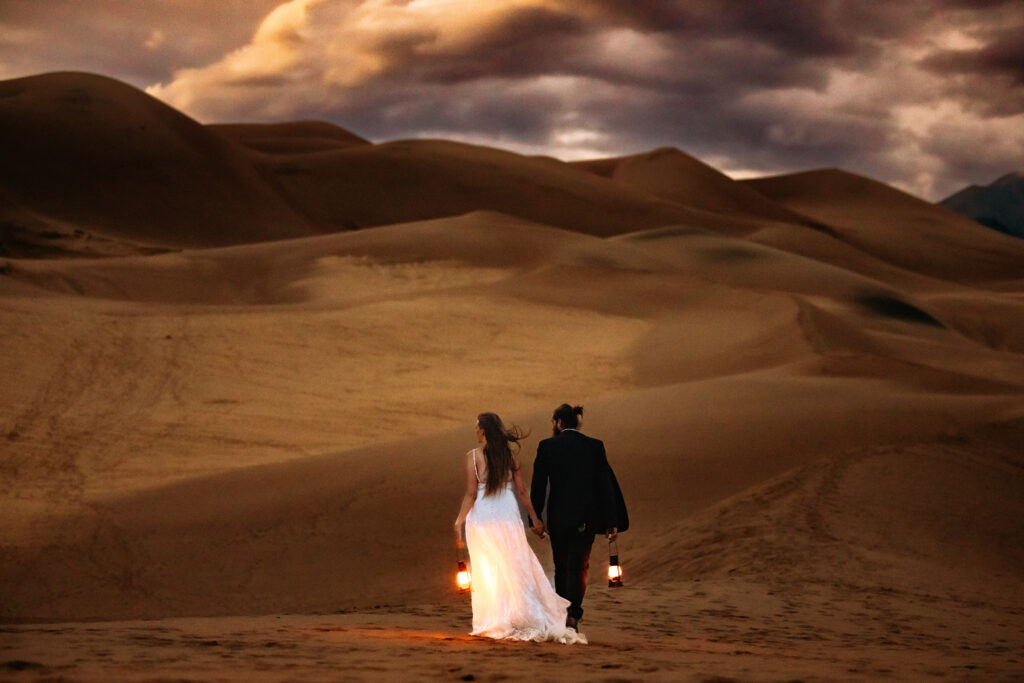
Different from everything else on this list. Largest sand dunes in North America. Almost zero light pollution, which means if you want a night ceremony or vows under the stars, this is the only place in Colorado that delivers it that hard.
Choosing Between Locations
If you want a deeper dive into how to compare locations, I broke down the top National Parks for elopements here: Best National Parks to Elope in 2026: Pros, Cons, and Vibes.
Step 3: Permits
Here’s the deal with Special Use Permits.
If you’re getting married on public land in Colorado (National Parks, National Forests, Bureau of Land Management land, most state parks), you almost always need a permit. Costs run $100 to $400 depending on the location and the agency.
If you’re getting married on private property, a ranch, an Airbnb you’ve rented, or a paid venue, you don’t need a permit.
Spots that DO require permits:
- Anywhere in Rocky Mountain National Park
- Maroon Bells (Aspen)
- Great Sand Dunes National Park
- Most National Forest land near popular trailheads
Spots that DON’T require permits:
- Loveland Pass (state highway pull-off)
- Most Airbnb / VRBO ranches
- Most ski resort venues
- Privately owned mountain land
This is the kind of stuff I help my couples sort out. The permit process is a pain, but it’s not hard once you know which forms go where.
Step 4: When to Elope in Colorado (Weather, Seasons, and What to Actually Expect)
The seasons in Colorado are not the seasons you’re used to.
Late Spring (May through Mid-June)
Honestly? Skip this one if you can.
Mud season. Trails are closed. Snow is melting unpredictably. Trail Ridge Road in Rocky Mountain National Park doesn’t usually open until late May. Mosquitoes start. Weather is unpredictable.
Lower elevation spots like Boulder, Estes, and the Denver area are workable. High alpine? Wait.
Summer (Mid-June through August)
The peak season. For good reason.
Wildflowers explode in July. Days are long. Trails are open. Temperatures are perfect (60s and 70s in the mountains, 80s in the city). Most photographers’ calendars book out a year in advance for these months.
The catch: afternoon thunderstorms. They are real and they are dangerous at altitude. We always shoot mornings or early evenings in summer to dodge them. If your ceremony is at 2pm in July at 12,000 feet, you are going to get rained on. Possibly hailed on. Possibly struck by lightning.
This is why timeline matters. We plan around the weather, not against it.
Fall (September through Mid-October)
If I had to pick one season, it would be fall.
Aspens turn gold around the third week of September. Crowds drop. Weather is more stable than summer. Temperatures cool but not cold. The light is incredible.
This is the move.
Winter (Mid-October through April)
Underrated. Genuinely.
Snow-covered everything. No crowds. Hot springs feel like the best decision you’ve ever made. Mountain towns are alive with skiers but not with elopement traffic.
The catch: you have to be okay with cold. Real cold. Like single digits at altitude. Layers, hand warmers, a real coat for portraits, nude base layers under your dress. We shoot fast and find places to warm up between locations.
Many high alpine spots are inaccessible from November through April due to road closures (Trail Ridge, Independence Pass, etc.). But there’s still tons of incredible terrain that’s open.
What About Altitude?
Real talk: altitude messes you up.
Denver is at 5,280 feet (this is why they call it the Mile High City). Most of the elopement spots in this guide are between 8,000 and 12,000 feet. If you’re flying in from sea level, you will feel it.
My non-negotiable rule for every couple: arrive at least one full day before your elopement. Two if you can. Drink twice as much water as you think you need. Skip the alcohol the night before. Eat real meals.
If you ignore this, you will get a headache on your wedding morning and you will not know why. I do not want this for you.
Step 5: Travel and Accommodations
Getting Here
Denver International Airport (DEN) is your best bet. Direct flights from basically everywhere. From DEN, you’re looking at:
- Estes Park / RMNP: 1.5 hours
- Breckenridge: 1.5 hours
- Aspen: 3.5 hours (or fly into Aspen-Pitkin County Airport directly)
- Crested Butte: 4 hours (or fly into Gunnison)
- Telluride / San Juan Mountains: 6 hours (or fly into Telluride or Montrose)
Other regional airports to consider: Eagle County (Vail), Colorado Springs, and Durango.
Rental Cars
Get something with all-wheel drive or 4WD. Especially if you’re going anywhere off paved roads or visiting between October and May. Standard sedans will struggle on gravel mountain roads, and “the road to that lake” is almost always gravel.
Where to Stay
The good news: Colorado is full of incredible lodging.
Cabins. Boutique hotels. Ski lodges. Historic mining-town inns. Airbnbs with hot tubs and mountain views.
A few I recommend:
Dunton Hot Springs (Dolores, San Juans area). A restored ghost town with private cabins. Bucket list.
Surf Hotel (Buena Vista). Modern mountain villas with regular live music.
The Wyman (Silverton). A 1902 historic hotel with massive get-ready rooms.
Western Hotel & Spa (Ouray). Historic hotel near Telluride with great food and a relaxed vibe.
Hotel Jerome (Aspen). Iconic. Expensive. Worth it for the right couple.
For most of my couples, I recommend booking a private Airbnb or VRBO over a hotel. You get more space to get ready, more privacy for portraits, and usually a better view. I have go-to recommendations for every region. Just ask.
Step 6: Things to Do in Colorado the Rest of the Week
You’re flying out here for an elopement. You should also do some other stuff.
A few favorites:
Hot springs. Strawberry Park (Steamboat), Mount Princeton (Buena Vista), Iron Mountain (Glenwood). All worth it.
Skiing or snowboarding in winter. Colorado has the best in the country. Yes, I’m biased.
Hiking. Obvious, but underrated. There’s a trail for every fitness level.
Red Rocks Amphitheatre (Morrison). If a band you like is playing while you’re in town, do not miss this venue.
Mountain town hopping. Drive through Leadville, Salida, Buena Vista, Aspen, Crested Butte. The towns themselves are part of the experience.
Off-roading. Black Bear Pass, Imogene Pass, Engineer Pass. Bring a Jeep and a sense of adventure.
Stargazing. Especially at Great Sand Dunes. Bring a blanket.
Make this a real trip. Don’t fly in, get married, fly out. That’s not what this place is for.
Step 7: Hire a Colorado Elopement Photographer Who Actually Knows the Area
I’ll be straight with you.
Hiring a photographer who lives 2,000 miles away and has never shot in Colorado is a gamble. They don’t know the light at Sprague Lake at 6am. They don’t know that Trail Ridge Road closes the second week of October. They don’t know which Airbnb in Estes has the best window light for getting ready. They don’t know that the gravel road to your ceremony spot has a 6 inch washout right now and you need a different car.
I do.
When you book me as your Colorado elopement photographer, you get:
- Custom location scouting based on what you actually want
- Permit help and timeline planning
- Vendor recommendations (florists, hair and makeup, lodging, even Airbnbs I personally vouch for)
- Weather backup plans for every shoot
- A photographer and planner in the same person, so you’re not paying two people to half-communicate
This is the part most couples don’t realize they need until they have it. And once you have it, you can actually relax and enjoy your day instead of planning your way through it.
What Does a Colorado Elopement Actually Look Like?
This is the question I get the most. Here’s the honest answer.
A typical Colorado elopement day with me looks something like this:
5:00 AM. Wake up. Coffee. Get ready in your Airbnb or hotel.
6:00 AM. I arrive. We do getting ready photos, detail shots of your dress, rings, invitation suite, anything important to you.
7:00 AM. Drive to the ceremony spot. The light right now is the best light of the whole day.
8:00 AM. First look (optional), then ceremony. Self-solemnize, exchange vows, sign your license. This part is usually 15 to 20 minutes.
8:30 to 10:00 AM. Portraits. We move through 2 to 3 different spots near the ceremony location. Hike if you want. Or don’t.
10:00 AM onward. The day is yours. Some couples do a brunch reception. Some do a full second adventure (hike, paddleboard, hot springs). Some go nap, change into a second outfit, and do sunset portraits at a totally different location.
That’s a Full Day Adventure with me. The whole day, your way.
If you want something simpler, the Half Day Experience covers ceremony plus portraits in one window with no extras.
How Much Does a Colorado Elopement Cost in 2026?
Honest numbers:
- Marriage license: $30
- Special Use Permit: $100 to $400 (most are $150-$200)
- Photographer: $4,500 to $8,500 depending on package and coverage hours
- Lodging (3 to 4 nights): $600 to $2,500 depending on where and what
- Travel: Varies wildly. Plan for $500 to $1,500 per person if flying.
- Hair and makeup: $250 to $500
- Florals: $200 to $1,500 depending on what you want
- Outfits: Whatever you want
- Optional vendors (videographer, officiant if you don’t self-solemnize, planner): variable
A realistic all-in budget for a full Colorado elopement experience runs anywhere from $7,000 on the lean end to $20,000+ if you’re going all out with lodging, multiple outfits, video, fine art albums, etc.
For comparison: the average traditional wedding in Colorado in 2026 is north of $35,000.
You do the math.
More Resources for Planning Your Colorado Elopement
If you want to go deeper on any of this:
- How to Plan the Perfect Destination Elopement in 10 Steps for the bigger picture
- How to Get a Marriage License in Colorado for the legal stuff
- Best National Parks to Elope in 2026 if you’re choosing between parks
- How to Plan an Elopement in Rocky Mountain National Park for the RMNP deep dive
- The Ultimate Guide to Planning a Crested Butte Elopement for the Crested Butte deep dive
- A Sunrise Loveland Pass Elopement to see a real one
- Mountain-Themed Estes Park Wedding to see another real one
FAQ SECTION
Can you legally elope in Colorado without an officiant?
Yes. Colorado is one of the few states that allows self-solemnization. You and your partner can sign your own marriage license. No officiant, no witnesses, no friend ordained on the internet. Just the two of you and the paperwork. It’s one of the biggest reasons Colorado is such a popular state to elope in.
How long does it take to get a marriage license in Colorado?
There’s no waiting period. You can apply for your license, pay the $30 fee, and walk out with it the same day. From there, you have 35 days to get married and 63 days to return the signed license. Most courthouses will get you in and out in under 30 minutes.
What’s the best time of year to elope in Colorado?
Late September to mid-October is my top pick. Aspens are gold, weather is more stable than summer, crowds are lower. July is also incredible for wildflowers if you can handle the afternoon storms (we’ll plan around them). Winter is underrated if you’re okay with cold and want snow-covered everything. Late spring is the only window I’d actively steer you away from.
Do I need a permit to elope in Colorado?
Most likely, yes. If you’re getting married on public land like a National Park, National Forest, or BLM land, you need a Special Use Permit. They cost $100 to $400. If you’re getting married on private property, an Airbnb, or a paid venue, you don’t need one. I help my couples figure out which permits they need for their specific spot.
How far in advance should I book my Colorado elopement?
For 2026 dates, I recommend booking 9 to 12 months out, especially if you want a peak season date (June through October). RMNP and Maroon Bells permits in particular go fast. For winter or shoulder-season dates, 6 months is usually enough. The earlier you book, the more options you have for both me and your dream location.
Ready to Actually Do This?
Here’s the deal.
I’d love to help you plan your Colorado elopement. Not just shoot it. Plan it. Help you pick the spot, sort out the permits, build the timeline, find the Airbnb, recommend the florist, and then show up on the day with my husband Eric and make sure you have actual photos of one of the best damn days of your life.
Let’s hop on a call. No pressure. Just a conversation about what you’re picturing and whether I’m the right person to make it real.


Comments